The Handover That Counts: Briefing Teaching Assistants Without Adding to the Day

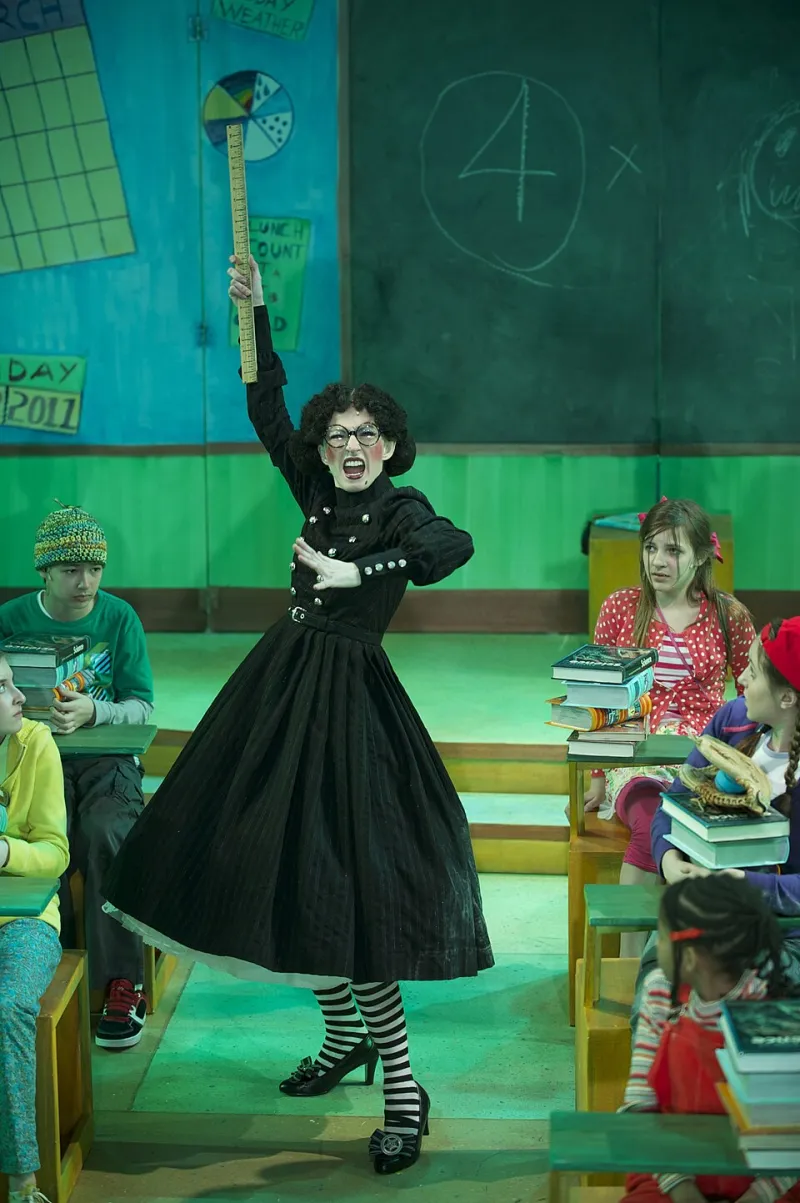
Photo: Official U.S. Navy Page from United States of America, Public domain, via Wikimedia Commons
A teaching assistant walks into a classroom knowing the seating plan, the pupils with additional needs and the location of the resources. What is often less clear is the purpose of the next fifty minutes: what is being taught, what the pupils should be able to do by the end, and where the assistant's contribution will make the greatest difference. The result is rarely dramatic failure. It is something quieter and more costly: capable adults defaulting to hovering, rescuing or running a parallel activity that never quite connects to the teacher's explanation.
The solution is not another meeting. It is a handover — brief, structured and repeated often enough to become ordinary. Fifteen minutes a week, or a focused conversation before a lesson, can change the quality of what pupils receive without adding materially to anyone's workload.
What the evidence asks of schools
The Education Endowment Foundation's guidance on making best use of teaching assistants is unambiguous about the principle: support staff should add value to teacher-led learning, not substitute for it. The recommendations emphasise structured interventions, appropriate training, scaffolding for independence and, crucially, an explicit link between what happens in a withdrawal group and what happens in the classroom.
That link depends on information. A teaching assistant cannot reinforce a concept they have not seen, prepare pupils for a task they do not understand, or judge independence against a success criterion that has not been shared. Deployment is a leadership decision, but the handover is a classroom decision. It is the point at which policy becomes practice.
A quarter of an hour, three questions
The most useful briefings are not downloads of the lesson plan. They are answers to three questions:
- What are we learning, and what will success look like?
- What will you do that I cannot do while I am teaching the class?
- How will we know whether it worked?
Everything else is optional. A briefing that begins with the learning intention, in language pupils will hear, gives the teaching assistant a frame for every subsequent decision. A briefing that names the specific role — pre-teaching vocabulary with four pupils, scaffolded questioning during independent work, recording evidence for a pupil with an education, health and care plan — turns vague support into purposeful action.
What to share
Keep the content tight and repeatable. The following items earn their place:
- The learning, in pupil-facing language. Not the National Curriculum reference; the sentence the teacher will actually use.
- The sequence and timing. When the teacher will explain, when pupils will work independently, when the assistant's role begins and ends.
- The pupils and the barrier. Which pupils need what, and why. Avoid labelling pupils by diagnosis alone; describe the task-specific difficulty.
- The intended independence. Whether the aim is to get a pupil started, to keep them going or to step back. This is the detail most often missing and the one that most affects the quality of support.
- Success criteria and evidence. What the assistant should look for, and what they should record. One or two sentences is enough.
- Access arrangements. Reading support, scribing, movement breaks, seating — the practical conditions that make participation possible.
What to leave out
A briefing is not a compressed lesson plan. Resist the temptation to explain the full rationale for the scheme of work, to discuss marking, or to hand over planning tasks. Teaching assistants should not be asked to plan lessons, mark in place of the teacher or make summative judgements about pupil progress. Those remain the teacher's responsibility, and blurring the boundary creates risk as well as workload.
General announcements — timetable changes, room moves, reminders about trips — belong in a separate channel. When they creep into the briefing, the fifteen minutes become a meeting and the essential handover is squeezed.
Handing over responsibility, not the lesson
The distinction matters. Handing over the lesson would mean transferring planning, assessment and accountability. Handing over responsibility means agreeing a specific, bounded contribution and trusting the adult to exercise judgement within it.
In practice, that sounds like: “You will lead the first five minutes of retrieval practice with these six pupils while I introduce the new vocabulary to the whole class. If they are stuck on question three, prompt them to use the worked example rather than telling them the answer. Note who manages independently and who needs the scaffold again tomorrow.”
That is a role, not a task list. It gives the teaching assistant scope to adapt without asking them to become a second teacher. It also gives the teacher useful evidence for the next lesson.
Making it stick
A routine survives only if it is protected. Set the same slot each week — before school, at the start of a shared free period, or in the five minutes before a lesson — and keep to time. Use a single shared page rather than a slide deck. Record the briefing in one line so that part-time staff, cover supervisors and anyone absent can catch up without a second conversation.
Leaders have a role in making this feasible. Directing time, avoiding duplicate meetings and ensuring that support staff are included in relevant training all matter. So does reviewing the routine after a half-term: is the briefing improving the quality of support, or has it become an administrative ritual? The test is whether teaching assistants can describe their role and the learning intention without referring to the page.
A one-page briefing template
Adapt the prompts to phase and subject. The whole page should take no more than fifteen minutes to complete.
| Section | Prompt |
|---|---|
| Learning | What are pupils learning today, in one pupil-facing sentence? |
| Success | What will a pupil be able to do, say or produce by the end? |
| Role | What specific responsibility is being handed over, and when does it start and finish? |
| Pupils | Which pupils need support, and what is the task-specific barrier? |
| Independence | Should the assistant prompt, scaffold or step back? What does that look like? |
| Evidence | What should be observed or recorded, and for whom? |
| Access | What practical arrangements are needed for participation? |
| Follow-up | One line for the shared record; any adjustment for next lesson? |
The template is deliberately modest. Its value lies not in the document but in the conversation it prompts: a short, regular exchange in which the teacher shares the plan and the teaching assistant shares what they see. That exchange is where deployment becomes co-teaching — and where the adults in the room begin to work as one.