Twenty Minutes, One Change: A Department Meeting That Turns Classroom Evidence into Action

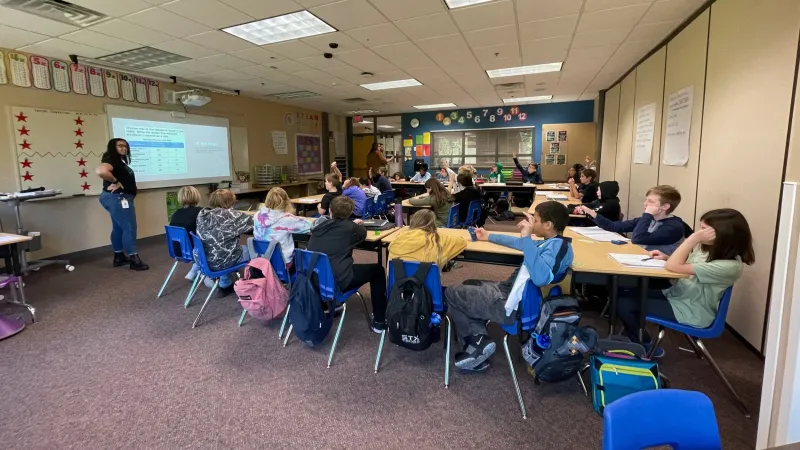
Photo: teachers collaborating around table reviewing pupil work staff meeting, via images.justwatch.com
School improvement often fails not because teachers lack commitment, but because the process is too large to hold. A department agrees a broad priority, collects a great deal of evidence, discusses it at length and then returns to the same routines because no one has decided what will actually change on Monday morning. The twenty-minute department review is an attempt to make improvement small enough to be credible.
The principle: evidence, not inspection
The review is not a lesson observation by another name. It is a short, structured meeting in which colleagues look at a small sample of classroom evidence, discuss what it suggests about pupil learning and agree one change that can be implemented within a defined period. The emphasis is on learning, not on judging individual teachers.
This distinction matters for workload. If the process feels like an inspection, staff will prepare for it as an inspection. They will produce polished folders, tidy books and carefully selected examples. The review should instead rely on ordinary evidence that is already being generated: pupils' work, exit tickets, short walkthrough notes, pupil voice from a brief conversation, or a teacher's own reflection on what pupils struggled with.
The aim is not to prove that teaching is good. The aim is to find out what pupils are finding difficult and to agree a manageable response.
Before the meeting: a one-page snapshot
The chair, usually the head of department or phase leader, prepares a single page. It should contain three things: the focus of the review, the evidence collected and one or two questions for the team to consider. The focus should be narrow. For example: 'How well are Year 9 pupils using subject-specific vocabulary in extended writing?' or 'What does pupils' work show about their ability to apply fractions in problem-solving?'
Evidence collection should be quick. A twenty-minute walkthrough of two or three classrooms, a sample of six exercise books, or a short set of exit tickets can provide enough material for a useful conversation. The point is not statistical validity; it is professional insight. The chair should choose evidence that can be reviewed in five minutes and should avoid asking staff to produce additional paperwork.
Where possible, the evidence should be brought to the meeting in a form that everyone can see. A few photographs of pupils' work, a short summary of exit-ticket responses or a brief note from a pupil discussion is sufficient. The meeting is not a data review; it is a conversation about learning.
The twenty-minute agenda
The format only works if time is protected. The chair should keep to the structure firmly and avoid allowing the conversation to expand into wider departmental business.
0–3 minutes: Remind the team of the focus. State the question being reviewed and the evidence that has been collected. Clarify that the purpose is to understand pupil learning and agree one change, not to evaluate individual staff.
3–8 minutes: Look at the evidence together. Give colleagues a short period of silent reading or observation before discussion. This ensures that everyone engages with the evidence rather than waiting for the most confident voice to speak first. Ask each person to note one thing pupils did well and one thing that suggests a barrier.
8–15 minutes: Discuss what the evidence suggests. The chair should steer the conversation towards pupil learning. Useful prompts include: 'What are pupils consistently getting wrong, and why might that be?' 'What have they not yet had enough practice in?' 'What would a small change in our teaching make possible?' The chair should park broader issues, such as timetable constraints or resourcing, in a separate list for later.
15–18 minutes: Agree one change. The team should settle on a single, specific adjustment that can be made across the department or phase. It might be a change to modelling, a different approach to vocabulary retrieval, a tighter feedback routine or a revised sequence of lessons. It should be small enough to implement within two to four weeks.
18–20 minutes: Confirm the follow-up. Agree who will do what, when the change will be reviewed and what evidence will be looked at next time. Keep the record to a few lines. The follow-up is not a new monitoring cycle; it is a brief check on whether the change is making a difference.
Avoiding the discussion spiral
Most meetings fail not because people are unwilling to engage, but because the conversation drifts. A discussion about vocabulary can become a debate about behaviour, then about cover, then about the timetable. The chair needs a simple technique: acknowledge the point, write it on a parking-lot list and return to the focus.
It also helps to separate evidence from opinion. If a colleague says, 'Pupils are not coping with this topic', the chair can ask, 'What in the evidence points to that?' This is not about shutting down professional judgement; it is about grounding the conversation in what pupils have actually produced. Over time, this habit makes discussions more precise and less personal.
Another risk is the search for a perfect solution. The review is not looking for the best possible change; it is looking for a sensible next step. A modest adjustment that is implemented consistently is more useful than an ambitious plan that stalls after a week.
One change, clearly owned
The change should be stated in a single sentence that everyone understands. For example: 'In every Key Stage 3 lesson, teachers will use a three-minute retrieval task at the start of the lesson to revisit previous vocabulary.' The sentence should identify the practice, the group of pupils and the routine. It should not be so broad that it cannot be reviewed.
Ownership matters. The head of department or phase leader should be responsible for checking that the change is happening, but the team should own the practice. The follow-up should be supportive rather than punitive. The question is not 'Who has failed to comply?' but 'What is happening in classrooms, and what does it tell us about the change?'
Why it fits real timetable pressure
The twenty-minute review is designed for schools where meeting time is scarce and teachers are already busy. It does not require additional cover, a new documentation system or a lengthy report. It can sit within an existing departmental meeting, a phase meeting or a professional development slot. Because the evidence is collected quickly and the follow-up is light, it is more likely to be sustained beyond the first enthusiastic half-term.
It also sends a useful message about school improvement. Change does not have to arrive as a large, top-down initiative. It can begin with a small group of colleagues looking closely at pupils' work, agreeing one adjustment and checking whether it helps. In a profession where workload is a persistent concern, that modest approach may be the most realistic way to make improvement feel doable.