A Protected Hour, Properly Defended: Collaborative Planning Without Another Meeting
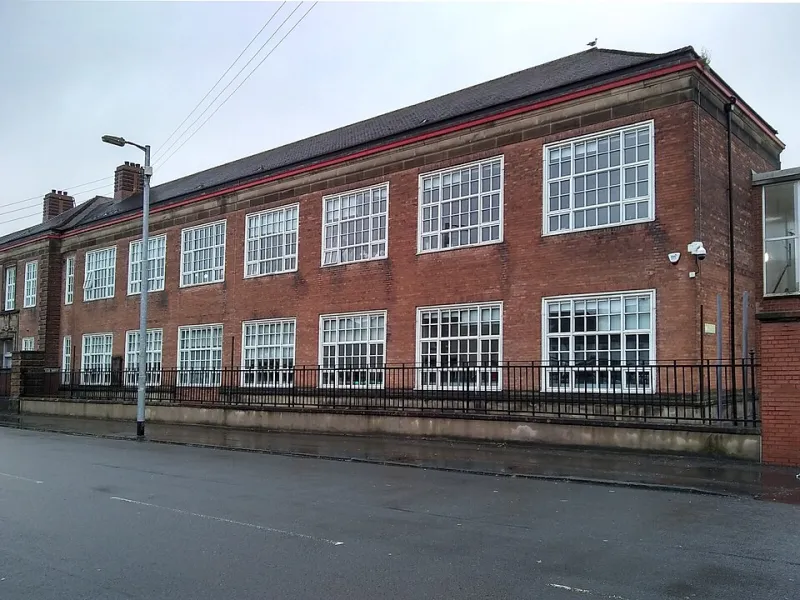
Photo: Richard Sutcliffe, CC BY-SA 2.0, via Wikimedia Commons
Collaborative planning is rarely opposed in principle. It is opposed in practice by the timetable. Subject teams are asked to think together about curriculum, assessment and progression, yet the week fills with cover, duties, data tasks and briefings that arrive with the force of the urgent. The result is familiar: planning becomes an item on a meeting agenda, squeezed between announcements, or a conversation in a corridor that ends when the bell goes.
A protected planning hour is a different proposition. It is not another meeting. It is a recurring, timetabled slot that belongs to a subject team and is defended by leadership as part of the school's operating model. Its purpose is sustained curriculum thinking, not information transmission. When it works, it reduces the need for additional meetings because it gives teams somewhere to do the work that meetings often only talk about.
Why another meeting is not the answer
Schools do not lack meetings. They lack protected time for the kind of thinking that cannot be done in five-minute segments. A collaborative planning hour should therefore be designed against the grain of meeting culture. It needs a clear purpose, a light structure and an output. It should not require a formal agenda circulated in advance, though it does need a focus question. It should not become a performance management tool, and it should not be treated as a spare slot to be filled when cover is tight.
The distinction matters for workload. If the hour is simply added to an already full calendar, it will be resented and eventually abandoned. If it replaces a less productive meeting, or consolidates several fragmented conversations into one protected block, it can be workload-neutral. The aim is not to give teachers more to do. It is to give them a better container for work they are already expected to do.
The operating agreement: what the hour is for, and what it is not
A protected hour survives only if its boundaries are explicit. Before the first session, the subject team and the line manager should agree a short operating agreement. It need not be lengthy, but it should be specific enough to prevent drift.
The hour is for a live curriculum question: the sequence of a key stage 3 unit, the quality of a shared assessment, the transition from GCSE to A level, or the evidence emerging from a recent piece of student work. It is for collaborative thinking that results in a decision or an artefact. That might be a revised scheme of work, a set of shared exemplars, a common assessment question or a agreed adjustment to next week's teaching.
The hour is not for administrative briefings, individual marking, data entry, cover conversations or open-ended discussion without a focus. It is not a forum for catching up on emails or for whole-school announcements. Those tasks have their own places, or they need to be removed. If senior leaders need to brief staff, they should use existing channels rather than annex the one slot teams have for planning.
The structure can be simple. Ten minutes to frame the focus question and recall the previous decision. Thirty-five minutes to work, with roles agreed in advance: a chair to keep time, a note-taker to capture decisions, and a colleague to test whether the proposed change is realistic. Ten minutes to agree what each person will do next and what evidence will be brought back. The output should fit on one page. That page is not bureaucracy; it is the memory of the hour.
Defending the hour when the week presses in
Even a well-designed hour will be tested. Cover needs arise, duties clash and last-minute briefings appear. Leaders should anticipate this rather than pretend it will not happen. The first defence is transparency: publish the protected slots for the term and treat them as scheduled commitments, not optional extras. The second is a cover protocol: if the hour must be used for cover, record the reason and reschedule it within a fortnight. Repeated cancellations should be visible to the senior leader who sponsors the arrangement.
The third defence is a briefing buffer. Schools often use the nearest available gathering to pass on information. A protected hour should be ring-fenced from this habit. Urgent messages can go through the usual channels; non-urgent messages can wait. This is not a trivial point. The credibility of the hour depends on whether staff believe it will actually happen and whether it will be used for its stated purpose.
Evidencing impact without inventing a data trail
The impact of collaborative planning is often subtle, so it is tempting to over-measure it. A lightweight approach is better. Keep the one-page logs from each session. At the end of the term, ask the team to review them together: which decisions were implemented, which were revised, and which did not survive contact with the classroom? This is not about surveillance. It is about professional recall.
A short staff perception check can also be useful. Ask whether the hour has reduced duplicated planning, improved consistency or given the team more confidence in a particular unit. Avoid claiming a direct causal link to examination results after one term. The honest claim is more modest: the conditions for better curriculum thinking have improved, and the team can point to specific decisions that followed.
A one-term pilot that keeps expectations honest
A pilot should start small. Two or three subject teams, one term, a clear review point. Before the pilot, establish a simple baseline: how often the team currently plans together, what usually interrupts it, and what the team would like to resolve. During the pilot, protect the slot and keep the operating agreement visible. After the pilot, review the logs, the perception check and the cancellation record.
The pilot should be presented as a trial, not a permanent entitlement. That protects leaders from overcommitting and protects staff from another initiative that arrives with a large promise and leaves with a small legacy. The success criteria should be realistic: the hour happened as scheduled, teams produced usable decisions, and no additional meeting was created to compensate. If those criteria are not met, the sensible response is to adjust or stop, not to declare the idea flawed.
A protected planning hour is not a glamorous reform. It is an operating discipline. It works when leaders defend its boundaries, when teams arrive with a focus, and when the output is something that changes the following week. For schools serious about workload and curriculum quality, that quiet, recurring hour may be one of the most useful pieces of timetable architecture available.